
Top 10 Magnetic Sunglasses Suppliers for Global Buyers
Magnetic Sunglasses are moving beyond a clever retail feature. They now combine prescription convenience, interchangeable lenses, and everyday sun protection. Grand View Research valued the global eyewear market at approximately US$183.36 billion in 2023. It also projects continued growth through 2030. However, public reports rarely isolate magnetic eyewear as a separate category. That gap matters. Buyers need supplier evidence, not inflated niche-market claims.
Optometrist and optical industry expert Dr. Gary Heiting has stated, “The best sunglasses are the ones you will wear consistently.” This practical point explains the appeal of magnetic designs. A frame that clips on securely may encourage regular outdoor use. Yet convenience cannot replace performance. Suppliers should provide UV400 or equivalent test documentation, lens-quality records, magnet durability results, and compatibility details for prescription frames. ISO 12312-1 alignment is also worth checking for general-purpose sunglasses.
This guide evaluates ten Magnetic Sunglasses suppliers for global buyers. The comparison considers product range, manufacturing experience, customization, quality control, packaging, minimum order quantities, and export capability. Small details reveal more than polished catalogs. Do the magnets stay aligned after repeated removal? Does the clip scratch the base lens? Can the supplier provide batch-level inspection records? These questions are often overlooked.
The market is promising, but not perfectly measured. Some supplier websites also make claims that require independent verification. Buyers should therefore request samples before approving large orders. A magnetic clip that feels firm in a showroom may loosen after weeks of daily use. Reliable sourcing requires patience, documented testing, and a willingness to challenge attractive assumptions.
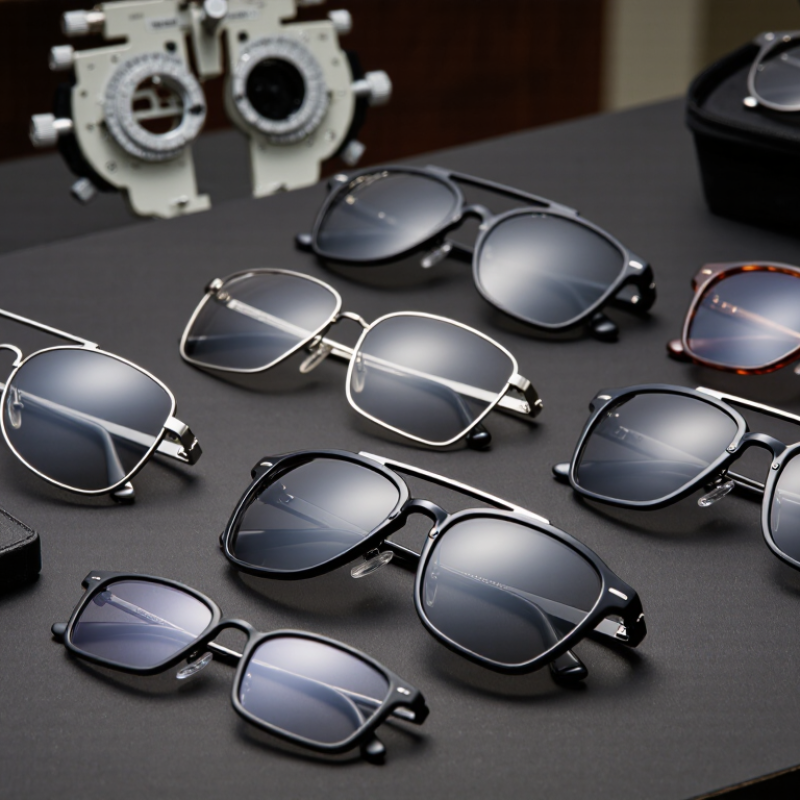
Magnetic Sunglasses: Definition, Features, and Key Applications
Magnetic Sunglasses: Definition, Features, and Key Applications
Magnetic sunglasses use small magnets to attach a tinted front lens or clip-on shield to a prescription frame. The system improves convenience during driving, commuting, and outdoor work. Many designs use polarized lenses to reduce reflected glare from roads, water, and glass. UV400 protection is also important, although buyers should verify laboratory test results. The World Health Organization reports that at least 2.2 billion people have near or distance vision impairment. This makes compatible eyewear relevant for prescription users. Still, magnetic strength, hinge alignment, and lens stability vary between suppliers.
Their applications extend beyond casual fashion. Drivers may prefer quick lens changes when entering tunnels or bright sunlight. Cyclists and hikers often need lightweight coverage, secure attachment, and ventilation. Office users can select clear prescription lenses with a detachable sun shield. Grand View Research estimated the global eyewear market at about USD 153.8 billion in 2023, showing strong commercial demand across optical products. However, market size does not guarantee product quality. Testing remains necessary.
Tips: Ask suppliers for UV transmission reports, impact-test records, magnet-cycle testing, and frame compatibility charts. Check whether the clip blocks cameras or sits unevenly on the nose. Request samples before large orders. A minor gap can create distracting glare. Some buyers overlook replacement availability, which may become an expensive weakness.
Top 10 Magnetic Sunglasses Suppliers for Global Buyers - Magnetic Sunglasses: Definition, Features, and Key Applications
| No. | Supplier Capability / Product Type | Typical Construction | Essential Technical Requirements | Key Applications | Recommended Buyer Verification |
|---|---|---|---|---|---|
| 1 | Magnetic Clip-On Sunglasses | Prescription or optical frame combined with a detachable front sun lens secured by small magnets. | Secure magnetic alignment, UV protection to 400 nm, accurate frame-to-clip fit, and smooth attachment and removal. | Everyday driving, commuting, outdoor work, and prescription eyewear conversion. | Request compatibility drawings, lens-transmittance reports, magnet retention testing, and sample fit approval. |
| 2 | Polarized Magnetic Sunglasses | Magnetic sun lens incorporating a polarization filter to reduce reflected glare. | Consistent polarization axis, clear optics, UV400 protection, scratch-resistant coating, and low visual distortion. | Road driving, boating, fishing, beach activities, and snow travel. | Check polarization performance, haze, distortion, coating adhesion, and independent optical test results. |
| 3 | Prescription-Compatible Magnetic Systems | Optical frames designed to accept prescription lenses and a matching removable sun attachment. | Accurate optical-center positioning, stable bridge and temple geometry, and compatibility with the specified prescription range. | Prescription users needing one frame for indoor and outdoor conditions. | Review prescription limits, fitting tolerances, lens-edging capability, and replacement-clip availability. |
| 4 | Sports and Outdoor Magnetic Eyewear | Wraparound or semi-wrap frame with a removable magnetic shield or interchangeable sun lens. | Impact-resistant lens material, secure retention during movement, adequate coverage, and stable temple grip. | Cycling, running, hiking, skiing, golf, and other active outdoor use. | Request impact-test documentation, retention testing, sweat-resistance evaluation, and field-use samples. |
| 5 | Polycarbonate Magnetic Sunglasses | Lightweight frame or lens system using polycarbonate components for improved impact resistance. | UV protection, optical clarity, controlled lens thickness, impact performance, and resistance to common handling damage. | Children’s eyewear, sports products, travel, and general outdoor protection. | Confirm material composition, impact testing, coating durability, and compliance with the target-market standard. |
| 6 | TR90 or Flexible Polymer Frames | Lightweight thermoplastic frame paired with a magnetic sun lens or front shield. | Dimensional stability, flexibility, comfortable weight distribution, reliable hinges, and secure magnet placement. | Daily wear, travel, sports, and long-duration outdoor use. | Verify polymer specifications, hinge-cycle performance, frame recovery after bending, and fit across size ranges. |
| 7 | Acetate Magnetic Eyewear | Cellulose-acetate frame construction with an integrated or concealed magnetic attachment system. | Consistent color and finish, accurate machining, strong attachment points, and secure frame-lens alignment. | Premium optical collections, fashion eyewear, and custom private-label programs. | Inspect material declarations, surface finish, color consistency, assembly tolerances, and sample-to-production matching. |
| 8 | Interchangeable Lens Systems | One frame supplied with multiple detachable lenses for different light and activity conditions. | Repeatable lens positioning, consistent optical quality, secure attachment, and clearly identified lens categories. | Multi-sport use, travel kits, driving, low-light outdoor conditions, and lifestyle eyewear. | Evaluate lens interchange cycle life, storage protection, replacement availability, and labeling accuracy. |
| 9 | Children’s Magnetic Sunglasses | Small-size frame and detachable sun lens designed for children’s facial dimensions. | Impact-resistant lenses, smooth edges, secure retention, low weight, UV protection, and age-appropriate fit. | School travel, family holidays, playground use, sports, and outdoor recreation. | Confirm applicable children’s product requirements, small-parts risk controls, impact testing, and size grading. |
| 10 | Custom OEM/ODM Magnetic Sunglasses | Buyer-specific frame, lens, attachment, packaging, and documentation developed for a defined market. | Validated drawings, approved materials, documented quality controls, production traceability, and market-specific compliance. | Private-label retail, optical distribution, promotional programs, and specialized international collections. | Audit production capability, approve pre-production samples, define acceptance criteria, and verify export documentation. |