Top 10 Empty Vape Cartridge Manufacturers for Global Buyers

Sourcing an Empty Vape Cartridge requires more than comparing prices and product photos. Global buyers need dependable manufacturers, clear specifications, and evidence of consistent production. This guide introduces ten manufacturers serving international markets with empty cartridge solutions for lawful, regulated applications. It focuses on practical purchasing factors, including materials, heating components, leak resistance, filling compatibility, packaging, and quality control.

Experienced buyers often request samples before approving large orders. A cartridge may look polished yet perform poorly during filling or transport. Small details matter. Check airflow consistency, oil-contact materials, connector dimensions, and storage instructions. Ask whether the supplier provides batch records, inspection reports, and transparent manufacturing information. Certifications can support confidence, but buyers should verify their scope and validity.

Regulations differ across countries and may change without warning. A supplier suitable for one market may not meet another market’s requirements. That assumption can fail. Responsible manufacturers should explain their compliance documentation without promising universal approval. Buyers must also confirm local rules with qualified legal or regulatory professionals. No ranking is perfect. Product quality, lead times, communication, and minimum order quantities can vary by project and season.

The manufacturers discussed here were selected through publicly available information and practical evaluation criteria. These criteria include manufacturing experience, technical support, customization ability, quality systems, and international supply capacity. The goal is not to promote one supplier blindly. It is to help buyers ask sharper questions, compare evidence, and choose an Empty Vape Cartridge partner with greater confidence. Real diligence takes time.
Top 10 Empty Vape Cartridge Manufacturers for Global Buyers

What Defines a Reliable Empty Vape Cartridge Manufacturer

What Defines a Reliable Empty Vape Cartridge Manufacturer

A reliable empty vape cartridge manufacturer treats consistency as a measurable process, not a sales promise. Grand View Research estimated the global e-cigarette market at USD 28.17 billion in 2023, with projected growth through 2030. That scale increases pressure on component quality. Buyers should request batch records, dimensional tolerances, leakage results, and material declarations. A cartridge should fit firmly, maintain clean airflow, and resist cracking during filling and transport. Small details matter.

Look for ISO 9001-based quality systems, controlled production rooms, and documented incoming inspections. Manufacturers should verify glass, ceramic, metal, seals, and adhesives through traceable supplier records. Independent laboratory testing can assess extractables, heavy metals, and thermal stability.

The United Nations Industrial Development Organization emphasizes documented quality controls as a foundation for dependable manufacturing. Still, certificates are not enough. I would inspect sample units after vibration, temperature changes, and repeated connection cycles. One overlooked seal can damage an entire shipment.

Transparent communication also defines reliability. A capable supplier explains minimum order quantities, lead times, tooling ownership, and corrective-action procedures before accepting payment. The U.S. National Institute of Standards and Technology notes that measurement traceability supports reliable comparisons between production batches.

Yet even strong systems can fail occasionally. That is why buyers need retention samples, inspection checkpoints, and written acceptance criteria. No audit replaces judgment.

How Global Manufacturers Are Evaluated and Compared

Global buyers should compare empty vape cartridge manufacturers through evidence, not polished catalogs. The 2023 World Bank Logistics Performance Index evaluates 139 economies across customs, infrastructure, and delivery reliability. These factors matter when a supplier ships glass cartridges across several borders. Request batch-level inspection records, material declarations, and traceability codes. Check whether heating elements, seals, and glass bodies receive separate quality checks. ISO 9001 certification is useful, but it is not proof of product performance. The ISO Survey reports more than one million ISO 9001 certificates worldwide, so buyers still need independent verification.

A serious comparison should include dimensional tolerance, leakage rates, breakage data, minimum order quantities, and replacement procedures. Ask for test results covering thermal cycling, chemical compatibility, and packaging vibration. A supplier with lower prices may create higher costs through damaged cartons or inconsistent airflow. Delivery history should be measured over several shipments, not one successful sample. No scorecard is perfect. Manufacturing data can also become outdated.

Tips: Build a weighted supplier matrix. Give quality and traceability the highest scores. Confirm certificates directly with issuing bodies. Request samples from multiple production batches. Review the factory’s corrective-action records, not only its product brochure. Also examine regional logistics risks using the World Bank index. A beautiful sample is only a beginning.

Top 10 Empty Vape Cartridge Manufacturers for Global Buyers

Global buyers need more than a polished catalog when comparing the top 10 empty vape cartridge manufacturers. A dependable supplier should provide material declarations, batch records, and clear production photos. Ask whether the cartridge uses tested glass, stable ceramic, or certified metal components. Each material affects flavor, heat control, and shipping durability. Small details matter.

The strongest manufacturers usually support custom dimensions, leak testing, and consistent airflow. They should also explain their filling compatibility without making unsupported performance claims. Look for independent laboratory reports, quality management procedures, and traceable lot numbers. Export experience is valuable, but local regulations still require separate review. Rules differ by destination.

My own supplier screening is not flawless. A factory may pass an audit yet struggle with replacement parts or communication. Request samples from multiple production batches. Check the mouthpiece fit, oil-contact surfaces, threading, and packaging protection. A cartridge that looks clean can still show poor tolerance under repeated assembly. That is easy to miss.

For a practical top-ten comparison, rank manufacturers by verified quality, transparent documentation, response speed, minimum order flexibility, and after-sales support. Avoid selecting only by price. Low-cost components may create higher inspection expenses later. Choose partners that respect lawful applications, responsible packaging, and applicable safety standards in every market.

Top 10 Empty Vape Cartridge Manufacturers for Global Buyers

Non-company-specific industry benchmark profiles for international sourcing and technical comparison

Rank Manufacturer Profile Typical Cartridge Formats Common Capacity Options Primary Construction Materials Heating Technology Connection Standard Quality Documentation to Request Typical Buyer Applications Indicative Production Lead Time
1 Profile 01
High-volume specialist
510-thread oil cartridge; disposable-compatible cartridge 0.5 ml; 1.0 ml Glass reservoir, metal mouthpiece, ceramic or metal core Ceramic core; wickless design 510 threaded Material declarations, dimensional inspection records, leakage test results, batch traceability CBD and botanical oils; regulated vapor products where permitted Approximately 20–35 working days after approval
2 Profile 02
Ceramic technology
All-ceramic cartridge; glass-and-ceramic cartridge 0.5 ml; 0.8 ml; 1.0 ml Alumina ceramic, borosilicate glass, stainless-steel fittings Porous ceramic heating element 510 threaded Heavy-metal screening, thermal performance data, airflow testing, food-contact or applicable material compliance documents Viscous oils and low-additive formulations Approximately 25–40 working days after approval
3 Profile 03
Custom packaging
Standard cartridge; custom-mouthpiece cartridge 0.5 ml; 1.0 ml; 1.2 ml Glass, stainless steel, ceramic, polypropylene or other specified polymers Ceramic or cotton-wick coil options 510 threaded or project-specific connection Drawing approval, first-article inspection, compatibility testing, packaging specifications Private-label packaging projects and multi-market product lines Approximately 30–45 working days after final artwork and tooling approval
4 Profile 04
Small-batch flexible
Short-run 510 cartridge; sample and pilot lots 0.3 ml; 0.5 ml; 1.0 ml Glass or polymer reservoir with metal and ceramic components Standard ceramic or wick-based heating core 510 threaded Certificate of analysis for materials, sample retention policy, leak-rate records, visual inspection criteria Product testing, market trials and regional launches Approximately 15–30 working days for standard designs
5 Profile 05
Medical-style controls
Glass cartridge with controlled fluid path 0.5 ml; 1.0 ml Borosilicate glass, stainless steel, ceramic and specified elastomers Low-temperature ceramic heating element 510 threaded Risk assessment, process validation summary, lot traceability, extractables and leachables evaluation where applicable Botanical extracts and products requiring enhanced documentation Approximately 30–50 working days after technical validation
6 Profile 06
Export-oriented supplier
Universal 510 cartridge; compatible empty pod formats 0.5 ml; 0.8 ml; 1.0 ml Glass, metal alloy, ceramic and engineering plastics Ceramic core; optional mesh or wick construction 510 threaded or device-specific pod connection Export packing list, carton specifications, RoHS or market-specific declarations, inspection report Importers, distributors and contract filling operations Approximately 20–40 working days after order confirmation
7 Profile 07
Sustainable materials
Recyclable glass cartridge; reduced-plastic configuration 0.5 ml; 1.0 ml Borosilicate glass, stainless steel and limited polymer components Wickless ceramic heating element 510 threaded Material composition statement, recycled-content claim evidence, packaging recyclability information, leakage testing Markets with sustainability and packaging disclosure requirements Approximately 25–45 working days after specification approval
8 Profile 08
Premium finish
Decorative cartridge; tinted-glass cartridge; custom mouthpiece 0.5 ml; 1.0 ml; 1.5 ml Tinted or clear glass, anodized metal, ceramic and silicone seals High-density ceramic heating core 510 threaded Color approval, coating specification, dimensional tolerances, seal compatibility and drop-test records Premium product presentation and customized retail packaging Approximately 35–55 working days for customized finishes
9 Profile 09
Rapid sampling
Standard clear cartridge; universal sample cartridge 0.3 ml; 0.5 ml; 1.0 ml Glass reservoir, stainless steel or brass fittings, ceramic or cotton wick Standard ceramic or wick coil 510 threaded Sample inspection checklist, airflow measurement, resistance test, leak and aging test records Formula compatibility checks and pre-production evaluation Approximately 7–15 working days for samples; 20–35 for production
10 Profile 10
Integrated supply service
Empty cartridge with filling, labeling and secondary-packaging support 0.5 ml; 1.0 ml; 2.0 ml where legally applicable Glass, ceramic, stainless steel and market-approved polymers Ceramic, mesh or wick-based options 510 threaded or custom device interface Batch records, packaging specifications, stability data from the customer’s formulation, shipment inspection report End-to-end contract manufacturing and international distribution programs Approximately 30–60 working days depending on filling and packaging scope

Buyer note: Capacities, materials, certifications, testing requirements, minimum order quantities and delivery schedules vary by design, destination market and applicable regulations. Buyers should verify all technical documents, product samples and compliance requirements before placing an order.

Key Differences in Materials, Design, Capacity, and Customization

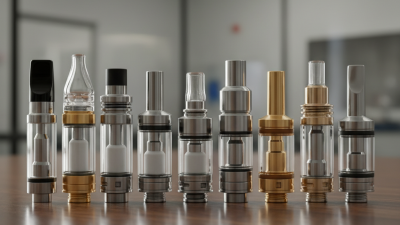
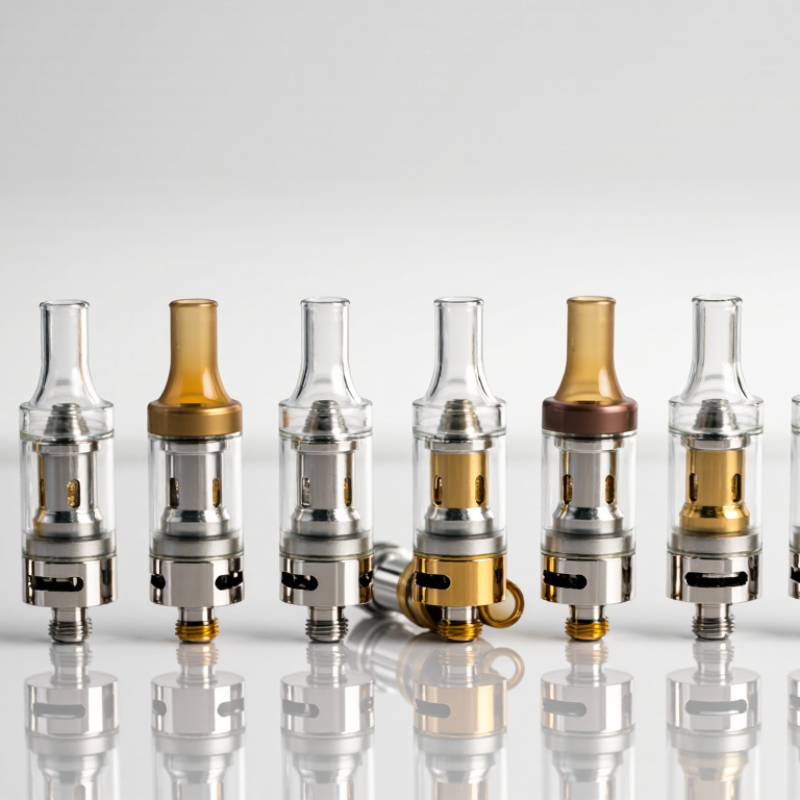
Choosing among the top empty vape cartridge manufacturers requires more than comparing catalog photos. Materials affect safety, taste neutrality, durability, and disposal. Glass usually offers strong chemical resistance and a clear viewing window. Polymer bodies can reduce weight, but heat tolerance needs careful verification. Metal parts may improve strength, although coatings and corrosion testing remain important. For regulated nicotine products, buyers should request material declarations and independent test reports.

Design differences appear in airflow paths, mouthpiece shape, seal structure, and connection consistency. A tight seal helps prevent leakage during shipping and storage. However, overly restricted airflow may create harsh draws and uneven heating. Ceramic heating elements can support consistent vapor production, while other designs may prioritize lower cost. Buyers should test cartridges with the intended device, not rely only on supplier samples. Small differences in thread fit can cause real production delays.

Capacity also changes purchasing decisions. Common options include compact formats and larger reservoirs, but stated volume may not equal usable volume. Customization can cover colors, mouthpiece finishes, packaging, dimensions, and connection types. Reliable manufacturers should provide drawings, tolerances, batch records, and sample approval procedures. Custom projects need clear testing stages. A minor oversight in seal dimensions can affect thousands of units. No design is perfect. Careful buyers should allow room for revision.

Top 10 Empty Vape Cartridge Manufacturers for Global Buyers

Key differences in materials, design, capacity, and customization are represented below through common catalog configurations used in global B2B sourcing. The chart compares typical nominal cartridge capacity rather than company-level rankings.

Glass cartridges are widely selected for chemical visibility and compatibility, while ceramic heating systems are commonly preferred for cleaner flavor delivery. Standard capacities include 0.5 mL and 1.0 mL, with larger 1.2–2.0 mL formats available for high-capacity designs. Customization typically covers mouthpiece materials, heating resistance, airflow, colors, logo printing, packaging, and device compatibility.

How to Assess Compliance, Quality Control, and Supply Capability

Top 10 Empty Vape Cartridge Manufacturers for Global Buyers

When assessing empty vape cartridge manufacturers, compliance should come before pricing. Ask for current certifications, factory licenses, material declarations, and product test reports. Documents must match the exact cartridge model and production site. Confirm whether materials meet the destination market’s requirements. Regulations differ widely, and assumptions create expensive delays.

Quality control should be visible, not merely promised. Request batch records, incoming material checks, dimensional reports, and leak-test results. Examine the mouthpiece, seal, connector, and internal chamber for consistent fitting. Independent laboratory testing can verify heavy metals, restricted substances, and material safety. A clean certificate is not enough. I have learned that traceability matters more when a problem appears months later.

Supply capability requires practical evidence. Review monthly capacity, lead times, tooling ownership, backup suppliers, and packaging controls. Ask for production samples from different batches, not one carefully prepared unit. Check how the manufacturer handles rejected parts and customer complaints. Communication speed also reveals operational discipline. Still, no audit is perfect. A supplier may pass inspection and later struggle during rapid growth. Recheck quality after major equipment, material, or personnel changes. Keep written approval criteria, because memory is unreliable.