
What Are the Top 10 Types of Smart Watch Bands?
A smartwatch band does more than hold a device against your wrist. It affects comfort, appearance, breathability, and how securely the watch stays in place during daily activities. A soft silicone strap may suit a sweaty workout, while a woven band can feel lighter during a long commute. Small choice. Real difference.
Smart Watch Bands come in many materials and designs, and the best option depends on your routine, skin sensitivity, watch model, and personal style. This guide explores ten common types, including silicone, leather, stainless steel, nylon, and woven bands. Each has trade-offs. Metal can feel polished but heavier; fabric may be breathable but need more frequent cleaning. These are practical tendencies, not guarantees, since construction and fit vary by brand.
As you compare the options, consider more than appearance. Check the band’s width and connector compatibility before buying, and look for a closure that feels secure without pinching. If your wrist gets irritated, give the material a break and clean the band according to its care instructions. Even a well-reviewed strap may not suit every wearer. That is worth remembering. The overview ahead is designed to help you narrow the choices, weigh everyday comfort against durability, and choose a band that fits how you actually use your watch—not just how it looks in a product photo.
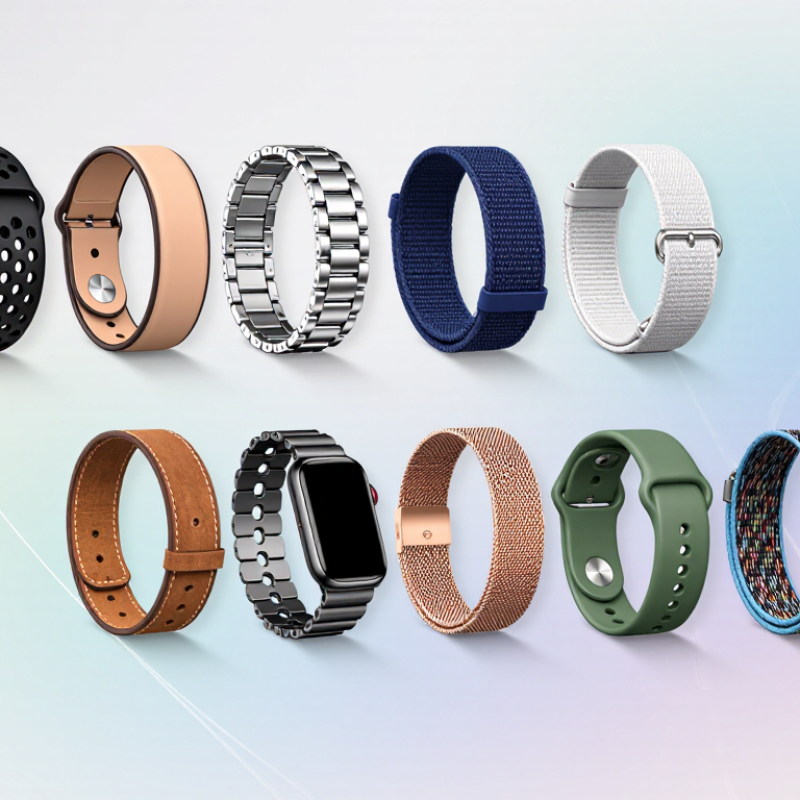
Silicone and Rubber Bands for Active, Everyday Wear
Silicone and rubber bands are popular choices for active, everyday wear because they flex easily and handle sweat better than many fabric straps. Silicone often feels smooth against the wrist, while some rubber blends have a slightly grippier surface. The feel varies by material and finish. Small detail, big difference.
For a run or gym session, check that the band sits securely without pinching. A snug fit helps keep the watch steady, but tight marks or tingling are signs to loosen it. After a sweaty workout, rinse the band with fresh water and mild soap, then dry it fully, especially around the holes and clasp. That routine takes little time. It can prevent odor and residue buildup.
These bands also work well for errands and daily routines because they are lightweight and easy to wipe clean. Still, “water-resistant” does not mean every band tolerates every product or temperature. Avoid harsh cleaners, and check the care guidance for the specific material. People with sensitive skin should remove the band if irritation appears and keep the contact area clean and dry. Comfort is personal. A soft band may still feel sticky in hot weather, so a quick trial at home can reveal whether the texture suits you.
Leather and Faux-Leather Bands for Classic Styling
Leather and faux-leather bands bring a softer, more traditional look to a smartwatch. A smooth black strap can suit office clothes, while brown leather pairs naturally with denim or knitwear. Small details matter: stitched edges, a brushed buckle, and a gently tapered shape can make the watch feel less like a gadget. Check the connector and band width before buying; similar-looking fittings may not be interchangeable.
Tips: Measure your watch’s attachment width. Wipe the band with a dry, soft cloth after wear. Keep genuine leather away from prolonged moisture, which can stiffen or stain it. Faux leather often handles light splashes more easily, but seams and surface coatings can still wear down.
Comfort depends on more than appearance. A padded leather band may feel pleasant at first, yet become warm during a long walk or a hot afternoon. Faux leather is often lighter to clean, though its coating may crack with repeated bending. Neither material is automatically better. Look for smooth inner surfaces and adjustable holes that let the strap sit snugly without pinching. There is a trade-off: classic styling can come with extra care, and even a well-made band may show wear sooner than expected.
What Are the Top 10 Types of Smart Watch Bands? - Leather and Faux-Leather Bands for Classic Styling
| Band Type | Material and Finish | Typical Look | Comfort and Breathability | Water and Sweat Considerations | Care and Best Use |
|---|---|---|---|---|---|
| Full-Grain Leather | Made from the outer layer of a hide, with its natural surface largely intact. | Distinctive natural grain that can develop a patina with wear. | Often supple after breaking in; breathability varies by thickness and lining. | Moisture can stain or stiffen the leather; not a good choice for swimming. | Keep dry and condition sparingly. Suits everyday and dress wear. |
| Top-Grain Leather | The outer hide layer, usually sanded or finished for a more uniform surface. | Smooth, refined, and generally consistent in appearance. | Usually comfortable once softened; lining and construction affect feel. | Prolonged exposure to water and sweat may damage the finish. | Wipe with a soft, dry cloth and allow to air-dry. Works well for office or smart-casual wear. |
| Corrected-Grain Leather | Leather whose surface has been buffed and embossed or coated to create a more even finish. | Uniform texture, sometimes with a pronounced embossed grain. | Can feel firmer than softer, less-processed leather; comfort depends on the backing. | Surface coatings may offer some resistance to light splashes, but the band is not necessarily waterproof. | Follow the maker’s care instructions and avoid soaking. A practical option for a tidy, consistent look. |
| “Genuine Leather” | A broad commercial label for leather; it does not by itself specify hide layer, grade, or tanning quality. | Varies widely, from smooth and simple to textured finishes. | Feel and flexibility vary with construction and finish. | Water tolerance depends on treatment and construction; assume it should be kept dry. | Check the product’s material details and care guidance. Suitable when the specific finish and construction meet your needs. |
| Suede | Leather with a soft, napped surface, commonly made from the inner split of a hide. | Matte, velvety texture with a relaxed, vintage-inspired appearance. | Soft to the touch; the nap can feel warm against the skin. | Water can leave marks and flatten or alter the nap; avoid heavy sweat and rain. | Use a suede brush when dry and avoid liquid cleaners. Best for occasional or dry-weather wear. |
| Nubuck | Leather with a finely sanded, velvety nap on the outer surface. | Soft matte finish with a subtle texture, often more refined-looking than suede. | Generally soft, though the feel varies by hide and lining. | Can absorb moisture and show stains; water protection depends on treatment. | Brush gently with a nubuck-safe brush and keep away from soaking. Consider it for dry, casual settings. |
| Bonded Leather | Made using leather fibers or scraps combined with binders and a surface layer; composition varies by product. | Often designed to resemble smooth or grained leather at a lower price point. | May feel less supple than solid-hide leather, depending on the backing and finish. | Repeated moisture and flexing can contribute to surface wear or peeling in some products. | Clean gently with a slightly damp cloth only if care instructions allow. Check construction details before buying. |
| Polyurethane (PU) Faux Leather | A synthetic material with a polyurethane surface layer over a fabric backing. | Can imitate smooth, pebbled, or embossed leather. | Often lightweight; breathability is usually limited by its coated surface. | May handle light splashes better than untreated leather, but seams and backing can still absorb moisture. | Wipe clean and dry promptly. Avoid prolonged heat and follow the product’s cleaning guidance. |
| Microfiber Synthetic Leather | Fine synthetic fibers with a resin finish, formulated to resemble leather. | Typically even-textured, with options ranging from matte to lightly grained. | Can be flexible and lightweight; comfort depends on lining and ventilation. | Resistance to moisture varies by coating and construction; it should not be assumed suitable for swimming. | Wipe clean according to the care instructions. A useful alternative for those avoiding animal leather. |
| Plant-Based Faux Leather | May use plant-derived ingredients or fibers combined with polymers or other binders; formulations differ considerably. | Appearance ranges from smooth to textured, depending on the material and finish. | Comfort and flexibility vary widely by formulation and backing. | Water resistance is product-specific; plant-based content alone does not indicate waterproof performance. | Check the stated composition and care directions. A potential choice for shoppers seeking alternatives to conventional leather. |
Note: Comfort, durability, and moisture resistance vary with tanning, coatings, lining, stitching, and overall construction. Leather and faux-leather bands are generally intended for dry, everyday wear rather than swimming.
Stainless-Steel Link and Milanese Mesh Bands
Stainless-steel link bands give a smartwatch a structured, polished look. Their individual links can often be removed to improve the fit, but sizing takes care. A loose band slides across the wrist; a tight one leaves marks after an afternoon at a desk. Check that the connector matches your watch and that the clasp closes securely. Some link designs feel noticeably heavy. That weight may be welcome for a formal outfit, but less comfortable during a long walk or workout.
Milanese mesh bands use fine, woven metal loops and usually adjust with a sliding clasp. The mesh sits close to the wrist and allows more airflow than solid links. It can feel cool against the skin at first. One small drawback: the edge may catch a sweater cuff, and a loose clasp can shift during movement. Test the adjustment before wearing it all day. Both styles benefit from occasional wiping with a soft cloth, especially after sweat or rain. Dry the band and your wrist thoroughly. Metal finishes and skin sensitivities vary, so comfort matters more than appearance alone. A careful fit helps, though it does not make every design comfortable.
Nylon and Woven-Fabric Bands for Lightweight Comfort
Nylon and woven-fabric bands suit people who want a light feel without a rigid, glossy surface. Their interlaced threads bend around the wrist and allow small adjustments in fit. A slim weave can feel barely noticeable during a commute or a long walk. That matters. Textile Exchange’s 2024 Materials Market Report estimates global fiber production reached 124 million tonnes in 2023, although it does not break out watch-band materials. The figure shows the scale of textile production, not proof that one fabric is automatically more comfortable.
Nylon usually resists moisture better than absorbent natural fibers, but sweat can still linger in a tight or dense weave. After exercise, rinse the band when care instructions permit, then let it dry fully before wearing it again. Check the underside for rough seams, and leave enough room for a fingertip beneath the strap. A close fit helps sensor contact; too much pressure can irritate skin. Grand View Research valued the global wearable technology market at 61.3 billion US dollars in 2022 and projected 14.6% annual growth from 2023 to 2030. That broad market estimate says little about band preferences. I may be giving fabric too much credit: clasp shape and fit can matter just as much.
What Are the Top 10 Types of Smart Watch Bands? — Nylon and Woven-Fabric Bands for Lightweight Comfort
Typical Moisture Regain of Textile Fibers
Moisture regain is the amount of moisture a fiber absorbs from the air, expressed as a percentage of its dry weight under standard conditions. Nylon is relatively lightweight and has a typical regain of about 4.5%. These reference values describe fibers, not finished watch bands; weave, construction, and finish also affect comfort.
Titanium and Ceramic Bands for Premium Durability
Titanium and ceramic bands suit users who want a more substantial feel than silicone or woven fabric. They are not interchangeable, though. ASM Handbook material data puts commercially pure titanium at about 4.51 g/cm³. CeramTec reports stabilized zirconia ceramic at roughly 6.0 g/cm³, so a ceramic band may feel heavier at the same volume. Actual weight depends on link size, clasp design, and the watch case. That matters daily. Titanium links usually offer a better strength-to-weight balance, while ceramic resists surface scratching but can chip after a hard impact. A desk edge is less concerning than a dropped band on tile.
For a practical fit, check the underside of the links, not just the polished outer faces. Smooth edges reduce rubbing during typing, and a secure clasp helps prevent accidental loosening. Titanium can show fine wear marks; ceramic tends to keep its finish but is less forgiving of sharp knocks. Neither material makes a band automatically comfortable. Link articulation, wrist shape, and hot-weather swelling still matter. One detail is easy to overlook: a premium material cannot fix poorly sized links. Have the band adjusted carefully, then test it while bending your wrist and gripping a handle. Small gaps can pinch. The data describes raw materials, not every finished band, so treat published density figures as a guide rather than a fit guarantee.