5 Tips for Choosing the Best Brush Vacuum Head
Choosing a Brush Vacuum Head can change how a vacuum handles carpet, hard floors, and pet hair. Small details matter. Brush stiffness, head width, swivel movement, and compatibility all affect daily cleaning. A head that lifts crumbs from a rug may scatter them across tile. One that glides easily may still wrap long hair around its roller.
The market is growing, but that does not make every accessory a good fit. Grand View Research valued the global vacuum cleaner market at approximately USD 14.7 billion in 2023 and forecast continued growth through 2030. That figure describes the wider market, not brush-head performance. It does, however, show why buyers face so many designs and claims. Dyson founder James Dyson has said, “I don’t think there is any point in being a designer unless you can make things better.” For shoppers, “better” means matching the head to real floors, debris, and maintenance habits.
This guide compares five practical factors: floor type, brush design, suction control, fit, and upkeep. Check whether the roller can be removed, whether bristles suit delicate surfaces, and whether the head seals well against the floor. Look for clear compatibility details, not just a familiar brand name. Still, no head wins everywhere. Product descriptions can also leave important details out. A careful choice starts with your home, not the marketing claims.
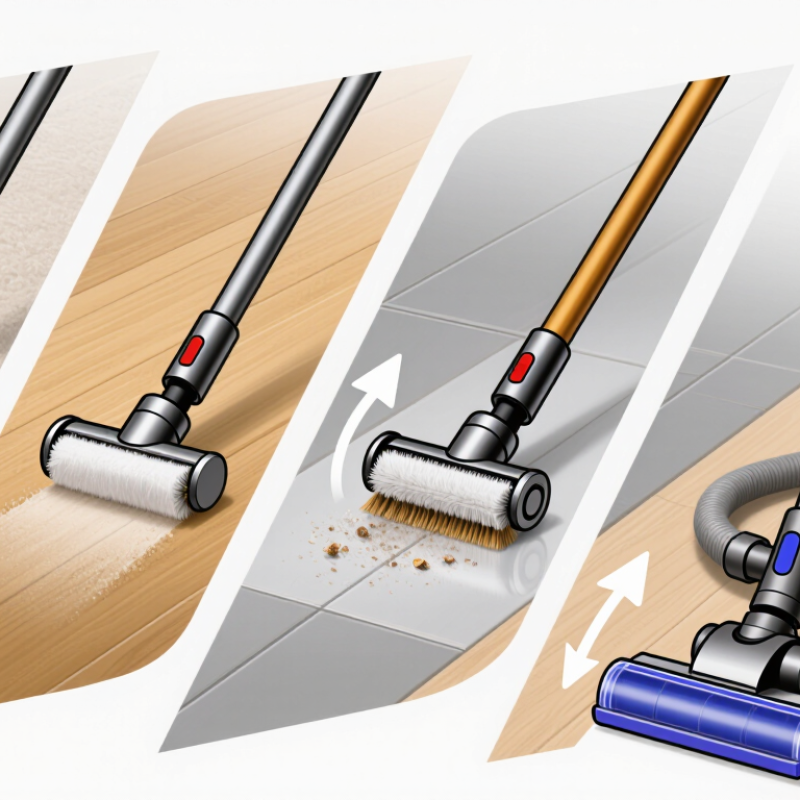
Identify the Floor Types the Brush Head Must Clean
Identify every surface the brush head must clean before comparing designs. A home may combine sealed hardwood, tile, low-pile carpet, and a thick hallway rug. These surfaces need different contact. Stiff rotating bristles can lift debris from carpet, but may scatter grit or mark delicate finishes. A head with a brush-roll shutoff offers more control on hard floors. Small detail, big difference. Check the vacuum’s instructions for approved surfaces, especially for waxed wood and delicate rugs.
The Carpet and Rug Institute’s Seal of Approval program evaluates vacuums on three criteria: soil removal, dust containment, and carpet appearance retention. That framework is useful, but it focuses on carpet performance; it does not prove a brush head suits every floor. Look for adjustable height or suction, and test the head on a hidden area first. Watch for rug edges lifting, bristles leaving tracks, or crumbs being pushed into tile grout.
I would not assume one setting works everywhere. Floor transitions can expose that weakness quickly. A short test across each surface often tells you more than a long feature list.
Choose Between Soft, Stiff, and Combination Bristles
A brush vacuum head does more than lift visible debris; its bristles contact the floor and guide dirt toward the intake. Soft bristles suit delicate sealed hardwood, laminate, and tile, where a gentler sweep can reduce scuff risk. They also collect fine dust, though long hair may wrap around the roller. Test an inconspicuous spot first.
Tip: Choose stiff bristles for durable, low-pile carpet or rough entry mats. Their firmer action can loosen grit and crumbs near the surface, but they may feel harsh on polished floors. If the head leaves marks or pushes debris, switch to a softer setting or another head. That mismatch is easy to miss.
Combination bristles offer a practical middle ground for homes with rugs and hard flooring. Look for rows of soft and firm bristles, and check whether brush height or speed can be adjusted. On thick rugs, a rotating brush may tug fibers; on smooth floors, it can scatter larger crumbs. Mixed surfaces rarely behave alike, so one head may not clean every room equally well. Try it with familiar debris, such as flour near the kitchen or sand by the doorway. It may still leave a little behind.
Check Brush Head Compatibility With Your Vacuum
A brush head can look like a perfect fit and still fail at the connection. Check the vacuum’s model number, neck diameter, locking tabs, and electrical contacts before ordering. A powered brush needs compatible contacts; a suction-only head does not. Also compare the head’s width and swivel clearance with the vacuum’s floor nozzle. A few millimeters can matter.
Tips: Check the manual or parts diagram for the approved head type. Measure the connector, then compare its shape—not just its diameter—with the replacement. If possible, test the fit without forcing it. A loose joint can leak suction; a tight one can damage the fitting. Small detail, big nuisance.
Compatibility affects cleaning, too. The Carpet and Rug Institute’s Seal of Approval vacuum testing assesses three outcomes: soil removal, dust containment, and carpet appearance retention. Those results describe tested performance, not whether every brush head fits every vacuum. Match the brush to the floor as well: stiff bristles may snag delicate rugs, while soft bristles can struggle with embedded debris. I’d still verify the fit twice; product listings can be vague.
Compare Width, Maneuverability, and Cleaning Features
A brush vacuum head should match the rooms you clean, not just look wide and efficient. A broad head covers open floors quickly, but it can bump into chair legs and miss tight corners. A narrower head takes more passes across a large room, yet it often fits between furniture with less effort. Measure narrow gaps at home before choosing. Check the corners.
Maneuverability depends on more than width. A swiveling neck and low profile can help the head turn under a sofa, while a stiff joint may make small movements tiring. Brush features matter, too: adjustable height can help maintain contact across different floor surfaces, and a removable brush roll makes trapped hair easier to clear. Small details matter. Check that the head fits your vacuum connection and that replacement parts are available. There is no perfect combination; a very aggressive brush may not suit every delicate floor, and even a well-designed head needs regular cleaning. Compare these trade-offs against your own rooms and routine.
5 Tips for Choosing a Brush Vacuum Head
Compare cleaning width, maneuverability, and brush features to find a head suited to your floors and room layout.
How to read this chart: Estimated straight passes across a 10-foot-wide area, calculated by dividing 120 inches by the head width and rounding up. It assumes no overlap; real cleaning may require extra passes. Wider heads cover more ground per pass, while narrower heads are generally easier to steer around furniture. Also consider brush-roll suitability for your flooring, edge-cleaning design, and height adjustment.
Review Maintenance Needs and Replacement-Part Availability
When choosing a brush vacuum head, check how easily you can remove its roller and clear wrapped hair. A coin-slot cover or tool-free latch can save time after cleaning rugs or a long-haired pet’s favorite spot. Look for separately replaceable rollers, belts, end caps, and bearings; if one small part fails, replacing the whole head is wasteful. Check the parts list using the exact model number, not just the vacuum’s product family. Small detail. Confirm that instructions explain cleaning and reassembly clearly, since a loose roller cover can cause rattling or uneven contact.
Availability matters as much as upkeep. Before buying, see whether common wear parts are listed, priced, and sold individually, and whether the seller states how long they remain available. The European Commission’s vacuum-cleaner ecodesign rules set a 500-hour minimum motor operating-life test and require hoses to withstand 40,000 oscillations. Those figures cover the vacuum, not a brush head, but they offer a useful reminder: durability should be tested, not assumed. Ask for head-specific wear guidance. I would still inspect the roller after each deep clean; maintenance schedules rarely match every home. A dusty bearing or flattened bristles can make suction feel weaker, even when the motor is fine.