
2026 Best Bluetooth Smart Glasses for Buyers
Choosing Bluetooth Smart Glasses in 2026 means balancing everyday comfort with useful technology. Buyers may want clear calls, open-ear audio, voice controls, or a camera; few models excel at everything. The Bluetooth SIG’s 2024 Market Update forecasts more than 7.5 billion Bluetooth device shipments annually by 2028. That figure covers Bluetooth devices broadly, not smart glasses alone, but it shows how widely the connection standard is used. Bluetooth SIG also cautions, through its market analysis, that product categories differ in adoption and use. A large market forecast is not proof that any one pair will suit you.
Smart glasses are changing, too. At Meta Connect 2024, Meta CEO Mark Zuckerberg described glasses as “the ideal form factor for AI.” It is a compelling view, not a buying guarantee. A useful pair still needs reliable microphones, stable Bluetooth connections, comfortable frames, and controls you can manage while walking. Small details matter. A heavy arm can press behind the ear; a weak microphone can make a quiet call frustrating. Battery life may also fall short of marketing claims during frequent calls or audio playback.
This guide compares Bluetooth Smart Glasses by practical features, including fit, sound, battery performance, compatibility, privacy controls, and price. We’ll separate published specifications from hands-on impressions where possible, and flag claims that need closer checking. Not every feature is worth paying extra for. Buyers should verify phone compatibility and return terms before ordering, since fit is personal and app support can change. Some trade-offs are unavoidable; the right choice depends on how you will actually wear them.
What Bluetooth Smart Glasses Are and How They Work
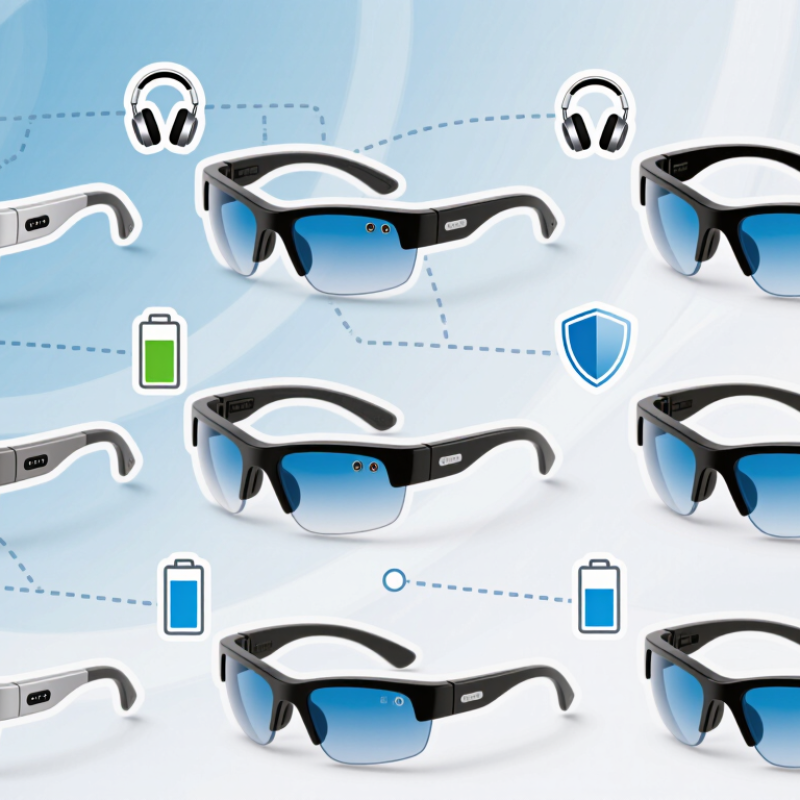
Bluetooth smart glasses are eyewear with small speakers, microphones, and wireless electronics built into the frame. They connect to a phone or tablet through Bluetooth, much like wireless earbuds. A tiny speaker near each ear can play calls, navigation prompts, or audio without covering the ear canal. Some frames also include touch controls or a button along the temple.
The phone sends digital audio to the glasses over a short-range radio connection. Microphones pick up the wearer’s voice, then send it back for calls or voice commands. The frame’s battery powers these parts, so frequent calls and music can shorten time between charges. Simple idea. The controls may still take practice: a quick tap can be hard to distinguish from a long press, especially while walking.
Bluetooth smart glasses are useful when reaching for earbuds feels inconvenient, such as hearing a turn-by-turn prompt on a familiar street. Sound can leak, though, and small speakers usually offer less bass than full headphones. Fit also matters; pressure near the temples can become distracting after an hour. Check phone compatibility, microphone performance, and charging details before buying. Specifications vary, and advertised battery life may not reflect a day of mixed use. A quiet-room call test can reveal more than a feature list.
Core Features and Technologies in 2026 Models
Bluetooth smart glasses in 2026 combine open-ear audio, microphones, sensors, and phone connectivity in a lightweight frame. Look for Bluetooth multipoint if you switch between a laptop and phone. Some models support newer audio codecs or low-energy connections, but performance depends on both devices. Microphone arrays can reduce steady background noise, though traffic and wind may still affect calls. Try speaking outdoors before relying on them for important conversations.
Tips: Test the fit with your usual prescription lenses, if needed. Check whether touch controls work with gloves, and whether the companion app supports your phone. Small details matter.
Battery life varies with volume, call time, and features such as voice assistants. Ask whether the quoted figure reflects mixed use or standby time. A clear charging indicator and a case that protects the lenses are practical advantages. Check for a visible recording indicator and simple ways to mute microphones; these features make everyday use more transparent. Audio can also leak at higher volumes, so keep it moderate in quiet rooms. I’ve found that comfort is easy to underestimate: a frame that feels fine for five minutes may press behind the ears after an hour. Specs help, but they do not replace a real fit check.
Types of Bluetooth Smart Glasses and Their Uses
Bluetooth smart glasses come in several forms, and the right type depends on what you need during the day. Audio-focused models use small speakers near the ears for calls, navigation prompts, or podcasts. They leave the ear canals open, which can help you hear nearby traffic and conversation. Sound may be less immersive in a noisy café. That trade-off matters.
Display-enabled glasses add simple visual information, such as directions or message alerts, within the wearer’s view. They suit people who want quick prompts without repeatedly checking a phone. Their displays vary in brightness, clarity, and viewing comfort, so a short indoor test may not reflect outdoor performance. Small text can still feel distracting.
Some smart glasses include a camera alongside Bluetooth audio and phone controls. They can help capture hands-free photos or short clips while walking, cooking, or working on a project. Check how the device signals recording, and consider whether the setting is appropriate before capturing others. Not every feature earns its place. For buyers, compare battery life, fit, microphone quality, and phone compatibility, then match those details to a typical day. A lightweight frame may matter more than extra functions if you plan to wear it for hours.
2026 Best Bluetooth Smart Glasses for Buyers: Types and Uses
Compare common smart-glasses types by the uses they are typically designed to support. A value of 1 indicates a common fit; 0 indicates it is not a typical primary use. Features vary by model.
Audio-first glasses are suited to calls and listening; camera-equipped glasses add hands-free photo or video capture; display-enabled glasses can present information such as navigation or notifications; accessibility-focused glasses may provide spoken prompts or other assistive features. Check individual product specifications before buying.
How to Compare Models for Comfort, Audio, Battery, and Compatibility
Comfort is more than frame weight. Check how the glasses sit on your nose, whether the arms press behind your ears, and if they stay steady when you look down. Try them for at least twenty minutes, not just a quick mirror check. Small pressure points can become irritating by afternoon. A spec sheet cannot tell you that.
For audio, test calls and spoken directions in a quiet room and outdoors. Open-ear speakers keep you aware of nearby sounds, but traffic or wind may make voices harder to hear. Keep the volume moderate and listen for clear speech, not just strong bass. Battery claims also need context. Music, calls, and frequent voice commands can drain a charge faster than occasional use. Check charging time and whether the case adds useful hours. It’s easy to overlook.
Compatibility affects daily convenience. Confirm that the glasses support your phone’s operating system and the features you actually plan to use, such as call controls or voice assistance. Check whether setup needs a companion app and what permissions it requests. If possible, test pairing, reconnecting, and answering a call before buying. One awkward step can matter more than a long feature list. Specifications change, and real use varies, so treat advertised battery life as an estimate rather than a promise.
Key Buying Considerations for Different Needs and Budgets
2026 Best Bluetooth Smart Glasses for Buyers
Key Buying Considerations for Different Needs and Budgets
Bluetooth smart glasses suit different routines, so start with your main task. For calls, check microphone clarity in a quiet room and beside steady street noise. For music or navigation, compare speaker direction and volume controls. Open-ear audio keeps you aware of nearby sounds, but it may bother people seated close by. Fit matters too: heavy temples can feel uncomfortable after an hour, even if the frames look light.
Tips: Try the glasses for at least ten minutes. Check nose-pad pressure, button access, and whether your prescription lenses can be fitted. Small discomforts count.
Set a budget around the features you will actually use. A lower-priced pair may handle calls and basic audio well, while higher costs can bring better battery life, lens options, or more reliable controls. Confirm battery claims against your expected daily use; frequent calls may drain a charge faster than casual listening. It is easy to focus too much on specifications. Real-world comfort and clear return terms deserve equal attention, though I would still compare models in person when possible.
2026 Best Bluetooth Smart Glasses for Buyers - Key Buying Considerations for Different Needs and Budgets
Compare common Bluetooth smart-glasses categories by typical use, indicative US price, and practical trade-offs. Features and battery life vary by model; check the manufacturer’s specifications before buying.
| Buyer Type | Typical Price (USD) | Bluetooth and Audio | Camera or Display | Typical Active Battery Use | Key Buying Considerations |
|---|---|---|---|---|---|
| Budget-conscious listener | $50–$150 | Wireless audio for music, podcasts, and calls; commonly uses open-ear speakers. | Usually no camera or visual display. | About 4–8 hours of audio, depending on volume and use. | Prioritize comfortable fit, clear call microphones, physical controls, and a charging case. Open-ear sound can be harder to hear in noisy places. |
| Everyday calls and commuting | $100–$250 | Open-ear audio and hands-free calling; some models support voice assistants through a paired phone. | Usually screen-free; camera availability varies. | About 4–8 hours of audio; frequent calls can reduce runtime. | Check microphone performance outdoors, audio leakage, water-resistance rating, fit stability, and whether the glasses support the phone’s operating system. |
| Hands-free photo and video capture | $200–$500 | Bluetooth typically handles audio, calls, and phone connection; camera features may also require an app or Wi-Fi. | Includes a camera; most models in this category do not have an in-lens display. | Often around 3–6 hours of mixed use; continuous recording can shorten battery life substantially. | Check recording resolution, storage and transfer method, camera controls, privacy indicators, and local rules for recording people. |
| Navigation, notifications, or visual information | $500–$1,500+ | Bluetooth may connect the glasses to a phone or other device for audio, data, or control. | May include a small near-eye display; field of view and available functions differ widely. | Highly variable; display-heavy use may last only a few hours per charge. | Try the display before purchase if possible. Compare brightness, visibility outdoors, prescription compatibility, comfort, and which functions work without an internet connection. |
| Prescription-eyewear wearer | Base price commonly $100–$500; prescription lenses may add cost. | Audio and Bluetooth functions depend on the selected frame and model. | Camera or display features are model-dependent. | Use the estimate for the relevant feature category; prescription lenses do not determine battery life. | Confirm lens availability, prescription range, frame size, lens replacement policy, return terms, and whether added lens weight affects comfort. |
| Fitness and outdoor use | $100–$350 | Bluetooth audio for listening and calls; some models can pair with fitness or navigation apps on a phone. | Usually screen-free; integrated sensors are not standard across all models. | About 4–8 hours of audio, with shorter runtime possible at high volume or in cold conditions. | Look for a published water-resistance rating, secure fit, durable frame, sun protection where needed, and clear limits on health or activity-tracking features. |
Price and battery note: Price bands are indicative estimates in US dollars, not fixed market quotes. Active-use battery figures are broad category estimates; recording, display use, call time, volume, temperature, and battery age can change actual runtime.